Spring 2026 Highlights from UW CIPE
Throughout the Spring 2026 semester, the UW Center for Interprofessional Practice and Education impacted over one thousand learners hailing from over a dozen health and social care professional programs. What follows are some highlights from UW CIPE’s programming, distinguished students, and outreach initiatives between January and May 2026.
Growing Interprofessional Offerings
This spring, UW CIPE’s core Competency Modules continued to reach record numbers in student attendance, following a trend likewise observed in the Fall 2025 Modules.
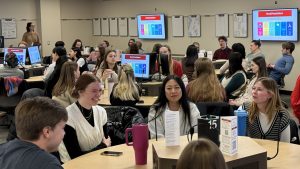
The Interprofessional Communication Competency Module (ICCM), held on February 23 at Signe Skott Cooper Hall, saw the participation of 414 students, up from 355 learners in Spring 2025. Students from UW–Madison’s Nutritional Sciences program and UW Health’s Diagnostic Medical Sonography School joined the ICCM for the first time, alongside learners from UW’s Nursing-TBSN, Occupational Therapy, Pharmacy, and Physical Therapy programs.
On April 13, 423 students convened at Signe Skott Cooper Hall for the Interprofessional Values and Ethics Competency Module (IVECM). This total is also a notable increase from Spring 2025’s enrollment of 365 students, reflecting healthy student cohorts in UW’s Genetic Counseling, Nursing-ABSN and TBSN, Occupational Therapy, Pharmacy, and Physical Therapy programs.
This past semester also marked the last hurrah for UW CIPE’s four Competency Modules, as the Center will roll out four newly redesigned and contemporized “Competency Sessions” to take their place for the 2026-2027 academic year. Stay tuned for more details soon!
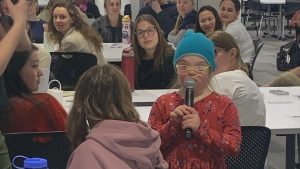
UW CIPE also served a wide swath of UW’s health and social care learners this Spring through the return of its “Cases of Patients” series. These two-hour sessions invite health profession students to hear from individuals with lived experience of complex and often-misunderstood health conditions. These active learning experiences equip learners with greater knowledge, empathy, and interprofessional competencies of teamwork and communication.
On March 10, 121 learners participated in the third annual Cases of Patients: Down syndrome, held at the Health Sciences Learning Center. Students from UW’s Genetic Counseling, Nursing – ABSN and TBSN, Physician Assistant, and other programs heard firsthand from individuals with Down syndrome and those who care for them, including family members and Waisman Center providers.
The third annual Cases of Patients: Addiction Medicine, held at HSLC on April 28, drew a record sum of 147 learners, up from 111 students in Spring 2025. Those with lived experience of substance use disorder along with addiction medicine specialists imparted their knowledge to a diverse group of Genetic Counseling, Medicine, Nursing (ABSN, TBSN & DNP), Pharmacy, Physical Therapy, Physician Assistant, Public Health, Rehabilitation Psychology, and Social Work program students.
Lastly, the virtual interprofessional course Bridging Across Differences Towards Flourishing returned early in the Spring 2026 semester for its second iteration. Designed by the Kern National Network and implemented by UW CIPE, Bridging Across Differences attracted 35 learners, all students, faculty, or staff from UW–Madison’s health and social care professional programs. Learners honed skills in “bridging,” facilitative process that advances flourishing by providing a framework for engagement across groups and individuals with different views on sometimes divisive topics.
On January 20, representatives from the Kern National Network visited Signe Skott Cooper Hall for a Discovery Visit, in which the KNN team facilitated consultative listening sessions with CIPE community members across roles and learning levels. These listening sessions sought to understand UW–Madison’s School of Medicine and Public Health integrated approach to health and public health, identify best practices in fostering health equity and community engagement, learn from SMPH’s structures for interprofessional and collaborative education, and explore opportunities for strategic alignment with KNN’s own goals and initiatives related to bridging.
Nurturing Interprofessional Leaders and Scholarship
UW CIPE is proud to congratulate the eight Spring/Summer 2026 graduates of the IPE Path of Distinction program. In addition to completing their rigorous degree programs, these newly minted health care professionals completed a longitudinal program, supervised by UW CIPE, of interprofessional learning, practice, leadership, and research. These eight IPE Path of Distinction graduates are as follows: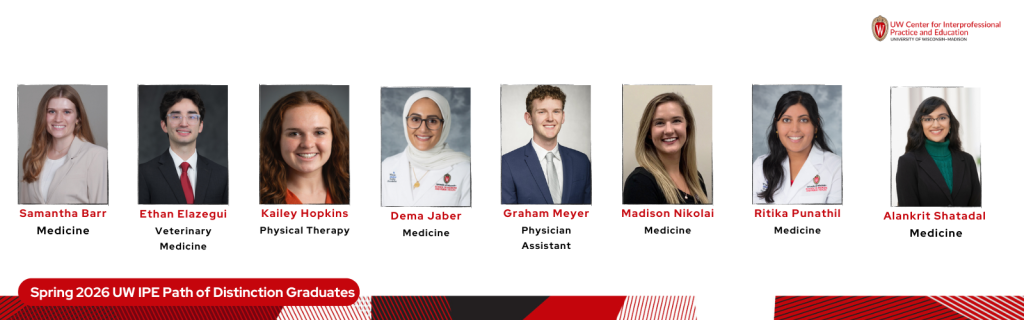
- Samantha Barr, MD
- Ethan Elazegui, DVM
- Kailey Hopkins, DPT
- Dema Jaber, MD
- Graham Meyer, MPAS
- Madison Nikolai, MD
- Ritika Punathil, MD, MPH
- Alankrit Shatadal, MD
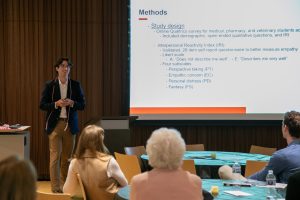
These students all distinguished themselves with their design and implementation of a capstone project focused on interprofessional education and collaborative practice. At UW CIPE’s Evening of Distinction ceremony on April 27, Ethan Elazegui presented on a study of self-reported empathy levels among students in UW’s Medicine, Pharmacy, and Veterinary Medicine programs. In 2025, Dr. Elazegui was awarded the Elaine Mischler, MD IPE Scholarship to support this research.
UW IPE Path of Distinction students continue to publish and present on their interprofessional projects, as they embark on their careers. Just this spring semester, Samantha Barr presented on her interprofessional Code Blue Training simulation at UW’s Department of Medicine Education Day. In May, Madison Nikolai presented findings from her study on media-based health education at UW’s Medical Education Day. Furthermore, Graham Meyer presented his poster on patient outcomes from interprofessional diabetes care at UW CIPE’s Evening of Distinction.
Congratulations to all of our IPE Path of Distinction students and graduates!
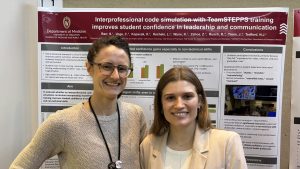
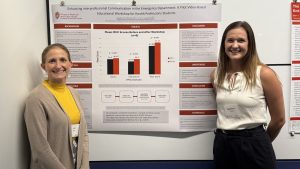
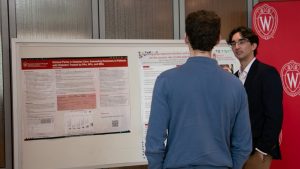
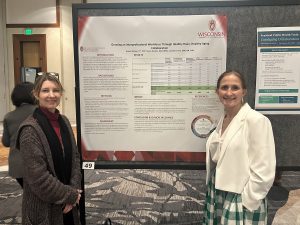
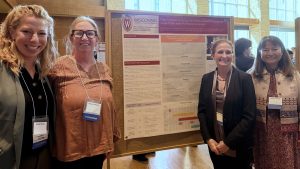
UW CIPE also extends our gratitude to our colleagues at UW–Madison for collaborating on interprofessional knowledge dissemination this spring. Also at the 2026 Medical Education Day, UW CIPE Director Jennifer Timm, DNP, RN, PHN presented a poster entitled, “The Healthy Aging Initiative: Growth Challenges and Future Directions,” alongside UW CIPE Healthy Aging Initiative Colleagues Susan Wenker, PT, PhD; Susan Switzer, MA, CIHWC; and Sally Eberlein, SDPT.
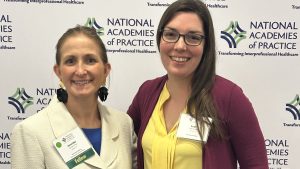
At the 2026 National Academies of Practice Meeting & Forum, held in Indianapolis this past March, UW CIPE represented two poster presentations. Dr. Wenker, Susan Switzer, and Dr. Timm presented a poster entitled, “Growing an Interprofessional Workforce Through Healthy Brain, Healthy Aging Collaboration.” Leah Kechele, DNP, RN, CPNP-AC and Dr. Timm represented a poster, “Learning Together: Advancing Collaborative and Compassionate Down syndrome Care,” co-written with Kevin Wyne, MPAS, PA-C; Laura Birkeland, MS, CGC; and UW CIPE Assistant Director Roberta Rusch, MPH.
UW CIPE’s Roberta Rusch and Dr. Timm also presented a poster alongside UW colleagues Kyoko Schatzke, DNP, MSN, RN, and Alexia Rebne, OTD, MS, at UW–Madison’s 2026 Teaching & Learning Symposium, held on May 14 at Union South. Their poster, “West Campus Connection: An Evidence-Based Redesign of a Large-Scale Health Professions Curriculum,” was co-written with Michael Cropes, PT, DPT; Susanne Barnett, PharmD, BCPS, FNAP; and UW CIPE’s Academic Program Specialist Zachary Zahos, PhD, and Student Staff Sarah Kopp, BS.
Fostering Interprofessional Community Engagement

On May 20, UW CIPE joined learners from across the School of Medicine and Public Health as part of an educational visit to Milwaukee’s Gerald L. Ignace Indian Health Center and Sherman Phoenix Marketplace. This community experience centered on the theme of “Determinants of Health in Clinic and Beyond.”
IPE Path of Distinction Candidates Rachel Lichte (MGCS, Class of 2027), Jenna Miland (Nursing-TBSN, Class of 2027), and Ellie Younger (MGCS, Class of 2027) participated in this community experience alongside learners from the Path of Distinction programs in Public Health and SMPH staff, including UW CIPE’s Zach Zahos.
This activity was hosted by the Public Health Integrative Program (POD-PH, PMR, and PHLITE) and funded by the Wisconsin Partnership Program. Public Health Integrative Program, which is composed of the Path of Distinction in Public Health, the Preventive Medicine Residency, and the Public Health Leadership in Teaching and Engagement program, and funded by the Wisconsin Partnership Program.